Scholarship Awardee Mohideen Buharie Blog: A Day with ICMA Experience
A Day with ICMA: Leading Through Disruption and Building Civic Infrastructure
By Mohideen Faisal Buharie, P.E. MBA, MPA | Issaquah, Washington | June 17, 2026
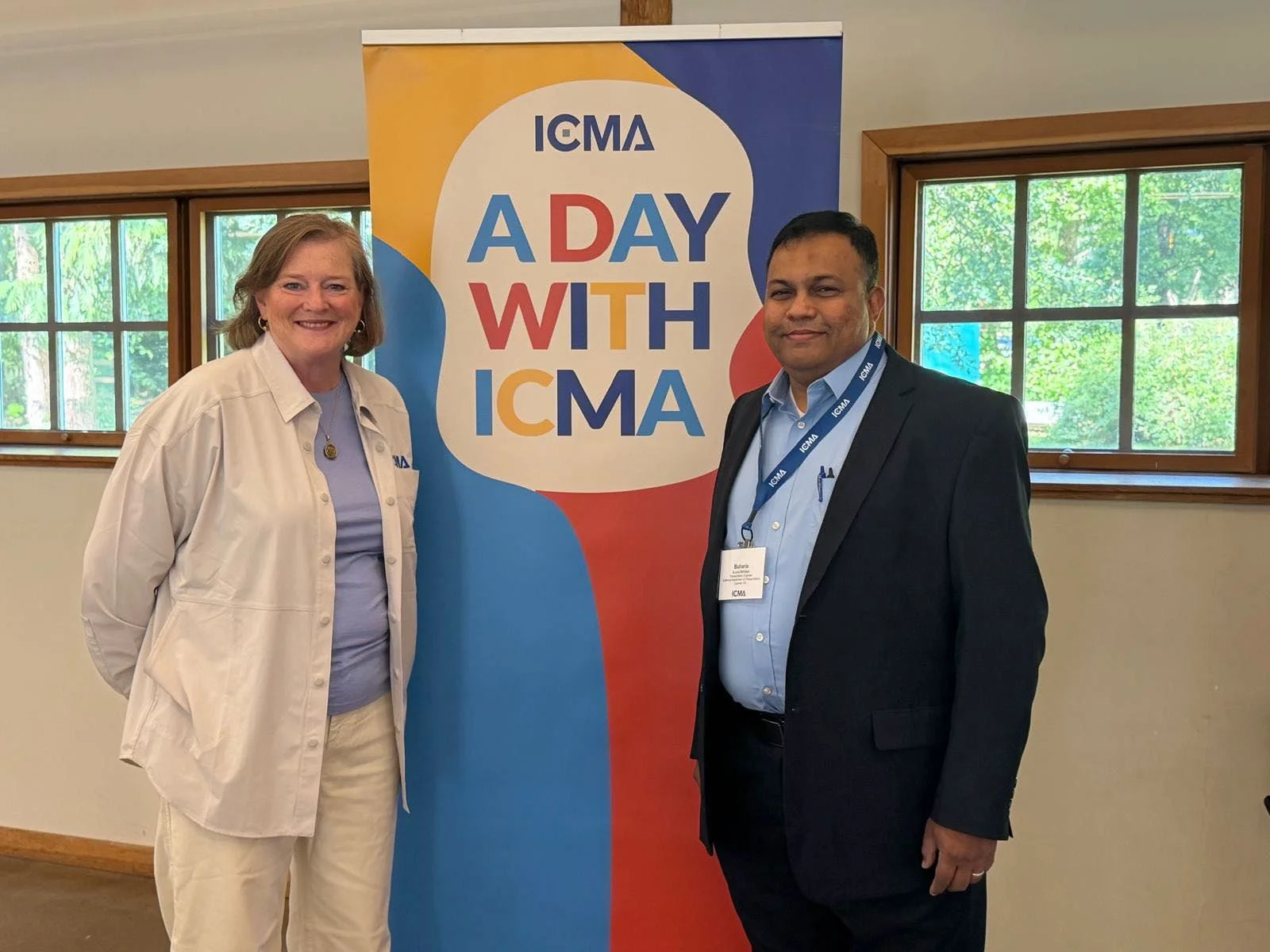
With ICMA Executive Director Julia D. Novak and Mohideen Faisal Buharie, Resident Engineer, California Department of Transportation (Caltrans)
Participating in ICMA Day in Issaquah, Washington, was a rewarding and thought-provoking experience that reinforced my commitment to public service and the continuous improvement of local government. The event brought together local government professionals from across Washington State, along with several participants from California, creating an excellent opportunity to exchange ideas, share experiences, and learn from one another.
The conference focused on the theme of “Leading Through Disruption” and explored how local governments can navigate an increasingly complex environment. Discussions highlighted workforce challenges, political polarization, social media influences, fiscal pressures, state preemption, technological change, demographic shifts, and climate-related impacts. These forces are reshaping local government and requiring public administrators to adapt while remaining committed to the core principles of professional management.
One quote that resonated with me came from former City Manager Jim Keene: “Disruption is inevitable. Reconciliation, or positive reaction to disruption, is not inevitable; it takes intent.” This message served as a reminder that effective leadership requires purposeful action, collaboration, and a willingness to build trust during times of uncertainty.
A particularly meaningful discussion centered on civic infrastructure. While we often think of infrastructure as roads, parks, buildings, and utilities, civic infrastructure also includes the relationships, trust, and community engagement that connect residents to one another and to their local government. Strong civic infrastructure creates resilient communities capable of addressing difficult challenges together.
Another valuable insight came from former ICMA Executive Director Bob O’Neill: “Trust becomes the working capital of innovation necessary to deal with the multi-sector, multidisciplinary, very difficult problems we face.” In today’s environment, trust remains one of the most valuable assets local governments can cultivate.
As an engineering professional, I was especially encouraged to learn more about the history of the city management profession. Early city managers often came from engineering backgrounds, reflecting the profession’s roots in problem-solving, infrastructure development, and public service. While the profession has evolved significantly and now welcomes talented leaders from a wide variety of disciplines, it was inspiring to recognize the important role engineers played in helping establish the foundations of professional local government management.
I am grateful to ICMA Executive Director Julia D. Novak and the many local government leaders who shared their knowledge and experiences throughout the day. The conference strengthened my commitment to serving communities with integrity, fostering trust, and contributing to the betterment of local government. The lessons learned in Issaquah will continue to guide my professional growth and reinforce the enduring values that anchor our profession during disruptive times.